


Singapore Shore Day: Things to Do Between Gardens by the Bay and the Merlion
Few port days pack in as much variety as Singapore. Tucked at the tip of the Malay Peninsula, this compact island city somehow fits soaring Supertrees, centuries-old temples, a hawker stall with a Michelin star and a rooftop infinity pool into a place you can cross by train in under an hour. On a Carnival cruise, things to do in Singapore range from futuristic gardens to heritage shophouses, and a little planning goes a long way toward making the most of a single day ashore.
Arriving at Singapore’s cruise port
Most Carnival calls to Singapore dock at Marina Bay Cruise Centre Singapore (MBCCS), a purpose-built terminal on the southern edge of the city that puts you within easy reach of the skyline before you have even cleared the gangway. A taxi or rideshare from the terminal to Gardens by the Bay takes around fifteen to twenty minutes, and the Merlion and Marina Bay waterfront are a similarly short ride away.
On a typical Singapore port call, you will usually have somewhere between six and eight hours ashore, which is enough time for one major garden or cultural district, a wander along the Marina Bay waterfront, and a proper hawker lunch, though it rarely stretches far enough to cover everything on this list.
Singapore rewards a bit of planning, simply because there’s so much packed onto one small island.
Gardens by the Bay: Singapore’s futuristic centrepiece
No list of things to do in Singapore gets far without Gardens by the Bay, the sprawling waterfront park where towering, tree-like structures called Supertrees rise up to sixteen storeys above the gardens below. The outdoor gardens, including the Supertree Grove, are free to wander any time, while the domed conservatories, Cloud Forest and Flower Dome, run on ticketed, timed entry from 9 am to 9 pm daily, with last admission around 8 pm to 8.30 pm.
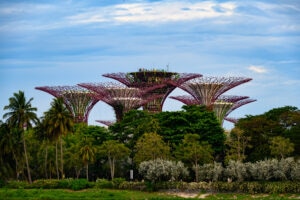
Cloud Forest houses a 35-metre indoor waterfall inside a misted mountain enclosure, while Flower Dome, the world’s largest glass greenhouse, rotates seasonal floral displays throughout the year. For a free option that still delivers, stick to the Supertree Grove and the elevated OCBC Skyway walkway between two of the tallest trees, then time your visit around Garden Rhapsody, the free light and sound show at the Supertrees that runs nightly at 7.45 pm and 8.45 pm.
The Marina Bay waterfront: Merlion Park, Helix Bridge and the skyline
Gardens by the Bay and the city’s most photographed icon, Merlion Park, sit on opposite sides of the same bay, connected by one continuous waterfront promenade. Budget twenty to twenty-five minutes of unhurried walking between the two, crossing the Helix Bridge, a free, 24-hour pedestrian bridge with a curved, DNA-inspired structure that is worth pausing on to take in the skyline views as you cross.
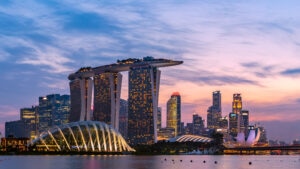
Merlion Park is home to Singapore’s national mascot, a statue with the head of a lion and the body of a fish that has been spouting water into the bay since 1972. Entry is free, and most visitors spend thirty to forty-five minutes here for photos and skyline views across to Marina Bay Sands.
If your day ashore stretches into the evening, this stretch of waterfront is also where Spectra, the free light and water show at Marina Bay Sands’ Event Plaza, runs nightly at 8 pm and 9 pm, with an extra 10 pm show on Fridays and Saturdays. Arrive fifteen to thirty minutes early to secure a decent spot on the waterfront or watch from the Merlion side of the bay for a broader, less crowded view of the same show.
For those wanting the view from above, the Marina Bay Sands SkyPark Observation Deck on the 57th floor looks out over the entire bay, including the very Supertrees and Merlion you have just walked between.
Chinatown Singapore: temples, shophouses and street food
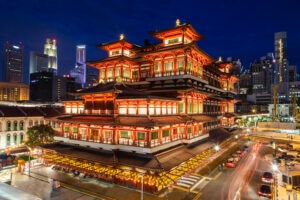
A short MRT ride from Marina Bay, Chinatown Singapore packs an outsized amount of culture into a few city blocks. The Buddha Tooth Relic Temple, a striking five-storey Tang Dynasty-style building, houses what is believed to be a sacred tooth relic of Buddha on its fourth floor, along with a museum, meditation spaces and a rooftop garden. It is free to enter, as is the nearby Sri Mariamman Temple, Singapore’s oldest Hindu shrine, with its ornately sculpted entrance tower.
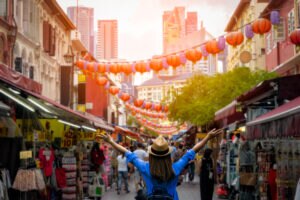
Wander the market lanes of Pagoda Street and Trengganu Street for souvenirs, then follow your nose to Maxwell Food Centre, a hawker hall famous for Tian Tian Hainanese chicken rice, one of Singapore’s most celebrated Michelin Bib Gourmand stalls.
Little India Singapore: colour, spice and Tekka Centre
A world away in atmosphere but only a short ride from Chinatown, Little India Singapore is a riot of colour, incense and spice-shop aromas centred on Serangoon Road. The Sri Veeramakaliamman Temple, one of the city’s oldest Hindu temples, is dedicated to the goddess Kali and welcomes visitors during morning and evening prayer sessions, provided shoulders and knees are covered.
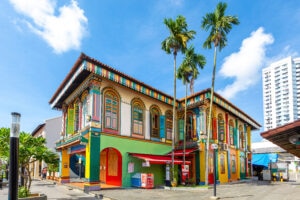
Tekka Centre is Little India’s answer to a hawker hall, part wet market, part food court, and home to Michelin-recognised stalls serving biryani and North Indian curries alongside stacks of fresh produce and fabric on the upper floor. Give yourself an hour or two to wander the surrounding lanes, including Campbell Lane’s Little India Arcade, before continuing on to your next stop.
Hawker centres: where Singapore actually eats
If there is one thing worth building your entire day ashore around, it is the hawker centres.

These open-air food halls, found in nearly every neighbourhood, are where Singapore’s multicultural food scene lives, and several hold Michelin recognitions despite plates costing just a few Singapore dollars.
- Satay by the Bay, next to Gardens by the Bay, for a quick, cheap lunch of satay, laksa or char kway teow before you start walking.
- Maxwell Food Centre, in Chinatown, for Michelin-recognised Hainanese chicken rice.
- Tekka Centre, in Little India, for biryani, roti and a genuinely local shopping detour.
- Lau Pa Sat, a restored Victorian-era hawker hall near Marina Bay, known for its evening satay street.
None of these requires reservations, and most dishes run just a few dollars, making hawker food one of the easiest and most authentic ways to eat well while you’re out exploring.
A river cruise through old and new Singapore
For a different perspective on the same skyline, a Singapore river cruise aboard a traditional bumboat is one of the most relaxed ways to see the city in a single sitting. The standard cruise runs about forty minutes, departing from jetties at Clarke Quay, Boat Quay or the Marina Bay area, and loops past Robertson Quay’s converted godowns, the historic bridges of the old river, the Merlion, and the glass towers of Marina Bay Sands.
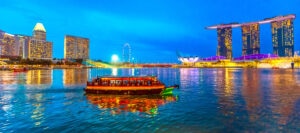
Boats run daily with frequent departures, and onboard commentary points out landmarks along the way. Late-afternoon sailings time nicely with golden hour, setting you up to walk straight into an evening at Clarke Quay’s restaurants and bars, or back along the waterfront for Spectra.
Sentosa Island: beaches, rides and a cable car with a view
If your ship’s call allows for it, Sentosa Island is worth the detour south of the main island. The Singapore Cable Car from Mount Faber is the most memorable way in, a ten-minute ride suspended above the harbour with views back over the port and across to Sentosa’s beaches and resorts.
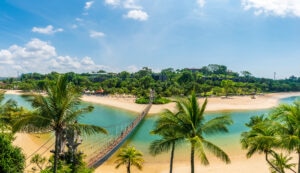
Once on the island, Universal Studios Singapore is the headline draw for families, with rides spread across seven film-themed zones, while the S.E.A. Aquarium, Fort Siloso’s World War II tunnels, and Siloso Beach round out a full day for those with more time. On a single port call, most guests choose one major attraction, such as Universal Studios or the cable car and a beach walk, rather than attempting the whole island, since Sentosa alone can comfortably fill an entire day.
Singapore Botanic Gardens: the quieter, older garden
Where Gardens by the Bay is all engineered spectacle, Singapore Botanic Gardens offers something older and quieter. Established in 1859, it became Singapore’s only UNESCO World Heritage Site in 2015 and remains free to enter every day from 5 am to midnight. Its centrepiece, the National Orchid Garden, holds the world’s largest orchid display, more than a thousand species and two thousand hybrids, and is open daily from 8.30 am to 7 pm for a modest ticket price.
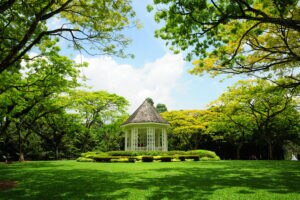
The wider gardens include a rainforest boardwalk, the historic Swan Lake, and Jacob Ballas Children’s Garden, making this a good half-day option for guests who would rather trade skyline views for shade and quiet. It sits a little further from the cruise terminal than Marina Bay, so it suits itineraries with a longer day ashore or an earlier start.
Planning your day ashore
With so much packed onto one small island, it helps to think in terms of a theme rather than trying to see everything at once. Skyline lovers might spend the morning at Gardens by the Bay before walking the waterfront to the Merlion and Marina Bay Sands. Culture seekers tend to split their day between Chinatown and Little India, anchored by a long hawker lunch in between. Families with a full day often head straight for Sentosa, while garden lovers with a longer call in port can pair Gardens by the Bay with the quieter Botanic Gardens.
Whichever combination fits best, the easiest way to make it happen without watching the clock is by booking through Carnival. Tour timing is built around the ship’s own schedule, transport and logistics are handled from terminal to terminal, and local guides know the city well, so you can spend the day taking it all in instead of managing the details.
Singapore packs an outsized amount of Southeast Asia into one stop, and a little planning goes a long way toward making the most of it. Browse and book Carnival’s cruise to Singapore and shore excursions beforehand.
Frequently asked questions
What is there to do in Singapore on a cruise stop?
Singapore blends futuristic gardens, multicultural heritage districts and some of the world’s best street food into one destination. Highlights include Gardens by the Bay, the Marina Bay waterfront and Merlion Park, Chinatown and Little India, Sentosa Island, and Singapore Botanic Gardens, most of which can be experienced in a single day ashore with a little planning.
Is Gardens by the Bay free to visit?
The outdoor gardens, including the Supertree Grove and the free nightly Garden Rhapsody light show, cost nothing to visit. Only the ticketed conservatories, Cloud Forest and Flower Dome, along with the OCBC Skyway, require paid, timed entry.
How far is Gardens by the Bay from the Merlion?
The two sit on opposite sides of Marina Bay, connected by a waterfront promenade and the Helix Bridge. The walk between them takes roughly twenty to twenty-five minutes at an unhurried pace.
What is the best hawker centre to try in Singapore?
Maxwell Food Centre in Chinatown and Tekka Centre in Little India are both easy, central choices, each home to Michelin-recognised stalls. Satay by the Bay, next to Gardens by the Bay, is a convenient option if your day starts there.
Can Sentosa Island be done in one day from a cruise stop?
Yes, though most guests choose one major focus, such as Universal Studios Singapore or the cable car crossing paired with a beach walk, rather than attempting the whole island, since Sentosa alone can comfortably fill a full day.
Do I need a visa to go ashore in Singapore on a cruise?
Australian passport holders can generally enter Singapore visa-free for short tourist visits. However, all visitors, including cruise guests, must complete a free Singapore Arrival Card (SGAC) online within three days of arrival, so it’s worth filling this out before you sail rather than leaving it for the day you dock.
Do hawker centres in Singapore accept card payment, or should I carry cash?
Many stalls now accept QR code and NETS-linked digital payments, but plenty, especially smaller and older ones, remain cash-only or don’t accept international cards. It’s worth carrying some Singapore dollars for a hawker lunch, even though restaurants, malls and shore excursions almost always accept major cards without issue.
What is the weather like in Singapore, and what should I wear for a day ashore?
Singapore is hot and humid year-round, with temperatures generally between 24°C and 33°C and humidity often above 75%. Rain can arrive suddenly at any time of year, heavier during the Northeast Monsoon from November to January. Pack lightweight, breathable clothing, comfortable walking shoes, sun protection and a compact umbrella, and bring a light layer for the strong air conditioning indoors. If you’re visiting the Buddha Tooth Relic Temple or Sri Veeramakaliamman Temple, cover your shoulders and knees.