


Bay of Islands, New Zealand: Where History, Nature & Adventure Meet
Bay of Islands is the kind of port call that will have you wishing you had booked two days instead of one. Tucked into New Zealand’s Northland region, this stretch of turquoise water and one hundred and forty-four islands is where the country’s history began, and where ancient kauri forests still stand tall over quiet walking trails. On a Carnival cruise, a day in Bay of Islands, New Zealand brings history, nature, and adventure together in a single, memorable stop ashore, and a little planning goes a long way toward making the most of it.
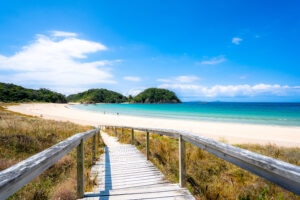
Arriving at the Bay of Islands cruise port
Bay of Islands is not a deep-water port, so Carnival ships anchor offshore and you will come ashore by tender. Tenders land at Waitangi Wharf, from here it’s a plesant 25-minute walk into the main tourist hub of Paihai. Alternatively, Carnival offers guests a free shuttle service into Paihai.
Because you will be tendering rather than stepping straight off a gangway, it is worth building in a little extra time at both ends of the day, allowing for the trip from ship to wharf in the morning and back again well ahead of all aboard. On a typical Bay of Islands cruise port call, you will usually have somewhere between six and eight hours ashore, which is enough time for one substantial excursion such as the Hole in the Rock cruise or a guided history tour of Russell, along with a bit of independent wandering around Paihia.
Bay of Islands Shore Excursions
Booking a Carnival shore excursion in advance takes the guesswork out of how to maximise your time in port, since every tour boat, bus, and guide is timed around the ship’s own schedule, leaving you free to enjoy the day instead of watching the clock.
A place where history comes alive
Long before it became a cruise stop, Bay of Islands was the setting where modern New Zealand’s story first took shape, and it remains one of the best places in the country to feel that history up close.
Waitangi Treaty Grounds sit just across the water from Paihia and mark the spot where, in 1840, Māori chiefs and representatives of the British Crown signed the Treaty of Waitangi, the founding document of New Zealand as a nation. The grounds include the Treaty House itself, along with Te Whare Rūnanga, an intricately carved Māori meeting house, and one of the country’s largest ceremonial war canoes. A visitor centre and art gallery round out the site, giving you real context for what happened here and why it still matters today.
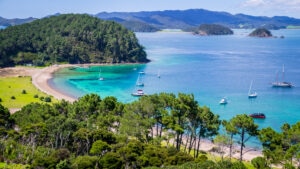
Across the bay, the town of Russell, known to Māori as Kororāreka, holds its own title as New Zealand’s first capital and one of its earliest European settlements. In the early 1800s, it earned a rowdy reputation as a whaling and trading port before settling into the quieter, gallery-lined waterfront town it is today. Christ Church, built in 1836, is the country’s oldest church and still bears musket ball scars from the conflicts of that era. A short walk along The Strand leads to the Pompallier Mission, New Zealand’s oldest surviving Catholic building.
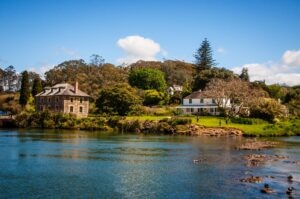
If you have a deeper interest in the region’s missionary history, Kerikeri, a short drive inland, is home to the Stone Store and Kemp House, generally recognised as New Zealand’s oldest surviving buildings, and worth a mention even if it does not make it onto every itinerary.
Go deeper with Carnival: the First Contact Tour pairs a guided drive through Russell with visits to a Māori reserve, Kororāreka Marae, Christ Church, and the Russell Museum, plus a stop at the Swordfish Club, the second-oldest game-fishing club in the world. For a more hands-on connection to Māori culture, Carnival’s Māori Waka (Canoe) Experience puts you in a traditional canoe on the Waitangi River, paddling past Haruru Falls and a thousand-year-old Māori site with a local guide leading the way.
Bay of Islands tours and shore excursions
The Hole in the Rock cruise
If Bay of Islands has one signature excursion, this is it. The Hole in the Rock is a natural opening carved through Piercy Island, known in Māori as Motu Kōkako, by centuries of wind and sea, and on a calm day boats can pass directly through it. Getting there is half the appeal, since the route winds past Paihia and Russell and out through the islands toward Cape Brett Lighthouse, with dolphins, seals, and occasionally whales making an appearance along the way.
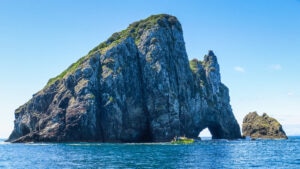
Carnival’s own Bay of Islands Hole in the Rock Cruise covers this whole route by catamaran, finishing with a pass through Motukokao Island’s famous opening and into the breathtaking Grand Cathedral Cave.
Glow worm cave tours
Ask most people where to see glow worms in New Zealand, and Waitomo tends to come up first, though Bay of Islands has its own quieter version worth seeking out. The Kawiti Glow Worm Caves, near Kawakawa, have been owned and guided by the Ngāti Hine family for generations. Groups are smaller, and the experience feels far less commercial than the larger Waitomo operations, but the payoff is the same: native New Zealand glow worms, known as Arachnocampa luminosa, light up the cave ceiling while a local guide shares family stories along the way.
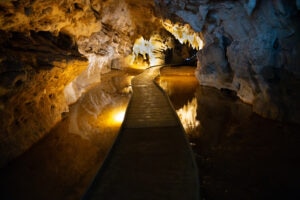
Tours generally run for about two hours, which makes Kawiti a strong option to pair with something shorter in Paihia or Russell. Book Glow Worm Caves Express with Carnival.
Waitangi River kayak to Haruru Falls
If you would rather set the pace yourself, paddling the Waitangi River offers a slower, more personal way to see the area’s history and scenery in the same morning. Carnival’s Waitangi River Kayak to Haruru Falls is a guided tour through the Waitangi Estuary and its mangrove forest, with the group paddling upstream toward Haruru Falls while local guides share the legends tied to the river along the way. No prior kayaking experience is needed, since a safety briefing and basic paddling instruction are given at Waitangi Beach before setting off, just a short walk from the pier, and all gear is provided.
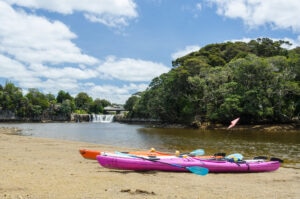
It is worth noting that this excursion is rated a more difficult activity level than most of the options on this list, runs for around three hours, and carries a minimum age of ten, so it suits you best if you are comfortable being active on the water rather than those looking for a gentler morning ashore.
Fishing charters
Bay of Islands has a genuine claim to being one of New Zealand’s best game fishing grounds, and it has been drawing anglers since the early nineteen hundreds. Inshore, snapper is the catch most charters target, along with blue cod, terakihi, and trevally, all of which are common in the bay’s sheltered waters. Further out, in season, the deeper water off Cape Brett is known for marlin and other big game species, though that kind of trip typically demands a full day and suits guests staying in the area longer than a single port call allows.
For a cruise day, a half-day inshore charter is the realistic choice, and it is exactly what Carnival offers through its Bay of Islands Fishing Trip, with bait, tackle, and fishing gear all included, and a guide who tailors the experience to whatever skill level shows up in the boat that morning.
Tastes of the Bay food and wine tour
If you prefer to spend your day ashore eating and tasting your way through the region have their own dedicated option. Carnival’s Tastes of the Bay tour heads inland to Kerikeri, passing citrus orchards, avocado groves, and stands of kauri forest along the way, before settling into a relaxed afternoon of sampling local produce. Stops include the Old Packhouse Market Café, Bakery and Deli for cheeses, wines, and baked goods, the adjoining Kauri Workshop for a look at Māori craftsmanship in native timbers that carbon dating has traced back tens of thousands of years, and Makana Chocolates for handmade chocolates crafted in small batches. The day is rounded out with a wine tasting featuring award-winning drops from local vineyard owners, followed by a scenic coastal drive back to the port.
This excursion runs around three and a half hours, carries a minimum age of eighteen, and is rated an easy activity level, which makes it a comfortable choice for you if you would rather relax and taste your way through Northland than hike or paddle it.
A quieter side of nature at Puketi Kauri Forest
Kauri trees are among the largest and longest living in the world, and New Zealand treats its remaining kauri forests with real reverence, since some of these trees were already centuries old when the Treaty of Waitangi was signed. Puketi Forest, inland from the bay, holds one of Northland’s most significant stands of kauri, and unlike the better-known Waipoua Forest and its famous resident tree Tāne Mahuta, Puketi sees far fewer visitors, which makes for a quieter, more contemplative walk beneath the canopy.
That quiet comes with a responsibility. Kauri dieback disease, a soil-borne pathogen with no known cure, has damaged forests across the region, so every trail into Puketi has cleaning stations at the entrance where you are asked to scrub and spray your footwear on the way in and on the way out.
Puketi Forest nature walk
The forest’s boardwalk sections make for an easier walk than the terrain might suggest, winding past towering kauri, nikau palms, and dense native bush alive with birdsong. Shorter loop tracks near the main entrance can be completed in under an hour, while longer routes deeper into the forest require closer to half a day, so it is worth setting expectations honestly.
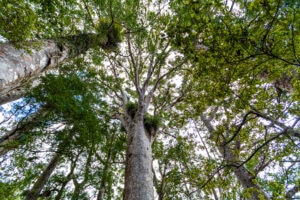
Given the realities of a port call, Puketi is best treated as a shorter, focused walk rather than a full forest trek, one that rewards the time spent without asking you to give up the rest of your day ashore. Book Puketi Forest nature walk with Carnival.
Planning your day ashore
With so much packed into one bay, it helps to think in terms of a theme rather than trying to see everything at once. History lovers might spend the morning at Waitangi Treaty Grounds before taking the ferry across to Russell for Christ Church, the Pompallier Mission, and a wander along The Strand. Adventure seekers tend to gravitate toward the Hole in the Rock cruise, sometimes paired with a half-day fishing charter if the schedule allows. Nature lovers often prefer a Puketi Forest walk in the morning followed by the Kawiti Glow Worm Caves before heading back to the wharf.
Whichever combination fits best, the easiest way to make it happen without watching the clock is by booking through Carnival. Tour timing is built around the ship’s own schedule, transport and logistics are handled from wharf to wharf, and local guides know the area well, so you can spend the day taking in the bay instead of managing the details.
Bay of Islands packs an outsized amount of New Zealand into one stop, and the only way to see it without racing the clock is to plan ahead. Browse and book Carnival’s cruise to Bay of Islands and shore excursions beforehand.
Frequently Asked Questions
What is there to do in Bay of Islands, New Zealand?
Bay of Islands blends history, nature, and adventure into one destination. Highlights include the Hole in the Rock boat cruise, Waitangi Treaty Grounds, the historic town of Russell, Kawiti Glow Worm Caves, Puketi Kauri Forest, and game-fishing charters, most of which can be experienced in a single day ashore.
How long does the Hole in the Rock cruise take?
Most Hole in the Rock cruises run around four hours round trip from Paihia, covering the scenic route through the islands, the passage through Piercy Island, and time set aside for dolphin and wildlife spotting along the way.
Can you see glow worms in Bay of Islands, or only in Waitomo?
Bay of Islands has its own glow worm caves at Kawiti, near Kawakawa. They are smaller and less commercial than Waitomo, guided by the Ngāti Hine family, and a convenient option for people who do not have time to travel further south during their cruise.
Is Puketi Forest good for a short visit?
Yes, in moderate doses. The shorter boardwalk loops near the main entrance can be walked in under an hour, which makes Puketi workable within a port call, though the forest’s longer trails deserve a half day if guests happen to have the time.
What fish can you catch in Bay of Islands?
Inshore charters typically target snapper, blue cod, terakihi, and trevally. Further offshore, in season, the waters off Cape Brett are known for marlin and other game fish, though those trips generally require a full day at sea.