

Phillip Island Penguin Parade: When to Go and What to Expect
Every evening at dusk, something extraordinary happens on a small beach on Victoria’s south coast. Hundreds of little penguins, the smallest penguin species in the world, emerge from the darkening water and waddle across the sand back to their burrows, just as they have been doing on Phillip Island for thousands of years.
The Phillip Island Penguin Parade is one of Australia’s most iconic wildlife experiences, and for Carnival guests with a Melbourne or Phillip Island port call, it is one of the most memorable and accessible evening shore excursions available anywhere in the country. Phillip Island sits about 140 kilometres southeast of Melbourne, roughly a 90-minute drive, making it the perfect destination to combine with a full day exploring the city before heading south at dusk for the parade. Read more about other things to do on a Melbourne Shore Day.
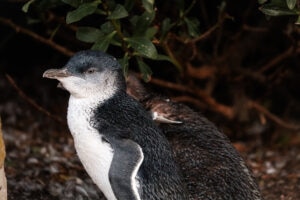
Meet the Little Penguins of Phillip Island
The little penguin (Eudyptula minor) is the smallest of the world’s 18 penguin species and the only one found along Australia’s coastline. Adults stand just 30 to 33 centimetres tall and weigh around one kilogram, giving them a size and character that consistently reduces grown adults to speechless delight on the night of the parade.
Despite their small stature, little penguins are extraordinary animals. They spend approximately 80 percent of their lives in the ocean, swimming up to 25 kilometres offshore in Bass Strait and Port Phillip Bay each day in search of anchovies, pilchards, barracouta, squid, and small fish. They are capable of eating around 25 percent of their body weight in a single day, which is the equivalent of a person consuming roughly 15 kilograms of food. They can also, somewhat remarkably, take short naps while floating on the ocean surface.
On land they are a completely different proposition: waddling, squawking, occasionally stumbling, and navigating by memory and the sound of their partner’s call back to the same burrow they use year after year. They are genuinely monogamous, typically staying with the same partner for life, though researchers have noted that penguin divorce rates do occur, particularly following poor breeding seasons.
Phillip Island is home to the largest little penguin colony in the world. Concentrated on the Summerland Peninsula, around 40,000 breeding adults make their home here. Before European settlement, there were 10 little penguin colonies around the island. By the 1980s, only one remained, and even that was declining. The Victorian Government’s Penguin Protection Plan, launched in 1985, reversed that trajectory through habitat restoration, fox eradication, and the installation of nest boxes throughout the colony. Today, the Summerland Peninsula is a thriving, protected reserve and every ticket purchase supports the ongoing conservation work of Phillip Island Nature Parks.
How the Phillip Island Penguin Colony Lives: A Year in the Life
The little penguins of Phillip Island follow an annual cycle that shapes what you will see during your visit, and understanding that cycle makes the experience considerably richer.
Breeding Season: July to December
Breeding begins in earnest from around July, when male penguins return to the colony to establish or reclaim their burrows. Males dig nesting tunnels up to 1.6 metres long in the sand dunes and low-lying vegetation, calling out to attract or relocate their partner. When a breeding pair reunites after time spent apart at sea, the recognition process is entirely vocal: each penguin has a distinctive braying call, and mates will call to each other until they find their way back together.
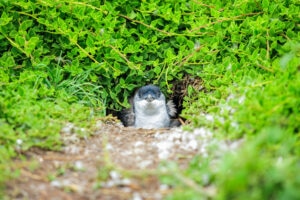
Eggs are laid from July through to December, with both parents sharing the 35-day incubation period in shifts. After hatching, both parents take turns brooding the chicks for the first three to four weeks while the other goes to sea to fish. As the chicks grow, both parents must fish simultaneously to keep up with the demand, returning each night to the burrow to regurgitate food directly into the chicks’ mouths. At around eight weeks of age, the chicks are ready to fledge. They waddle to the water’s edge and head out to sea for the first time with no guidance from their parents, navigating entirely on instinct.
Chick Season: September to January
The chick season from September through to January is one of the most active and visually rewarding periods to visit. The colony is busy with both parents making constant trips to and from the ocean, and the burrows are noisy with the calls of hungry chicks demanding food. By November and December, chicks are almost fully grown and just beginning to moult from their fluffy brown down into the distinctive blue-black adult colouring. Walking the boardwalks during this period gives a vivid sense of the colony in full operation, and the sheer density of penguin activity around the burrows is remarkable.
Moulting Season: January to April
After the breeding season, adult penguins spend several weeks intensively feeding at sea to build up their body weight before coming ashore to moult. Moulting is what ornithologists call a catastrophic moult: all 10,000 feathers are shed and replaced simultaneously over approximately 17 days. During this period, the penguins’ feathers are not waterproof, which means they cannot enter the ocean and cannot feed. They must fast on shore for the entire duration of the moult, surviving on the fat reserves they built up beforehand.
Moulting penguins look decidedly ragged, their new feathers coming through in uneven patches as the old ones fall away. You might see them sitting quietly near their burrows during boardwalk visits at this time of year. The colony is quieter during moulting season and the April-May period that follows, when many penguins are away at sea rebuilding their weight. It is a perfectly valid time to visit, just different in character to the busier breeding and chick months.
A Day in the Life: Why the Penguins Come Ashore at Dusk
Little penguins spend every daylight hour at sea. They leave their burrows before dawn and may swim considerable distances through Bass Strait in search of fish, travelling individually or in pairs. Before returning to shore, they gather in groups just beyond the breaking waves. These offshore gatherings, known as rafts, are a waiting game: the penguins are reluctant to cross the open beach in full light, where birds of prey like Pacific gulls and sea eagles pose a real threat.
As the sun sets and the light fades, the penguins gain courage in numbers. The first brave individuals begin waddling ashore, and others follow in a rush. They move in groups, not because they are herding animals in the way a flock of sheep might herd, but because the shared movement provides safety. They follow familiar tracks across the sand, using memory and the sound of their partner or chicks calling from the burrow to navigate home. On a good night, the beach is alive with dozens of penguins all waddling determinedly in different directions, all heading for a specific burrow they know from memory.
What to Expect on the Phillip Island Penguin Parade
The Penguin Parade begins at dusk every single night of the year, 365 days a year without exception. The time varies with the season: in summer, when the sun sets as late as 9 pm, the parade begins well into the evening. In winter, when sunset arrives around 5 to 6 pm, the parade begins earlier and the evening ends at a more family-friendly hour.
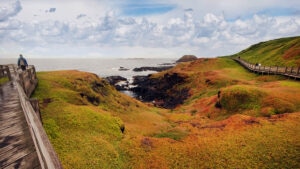
Photography is not permitted from sunset onwards to protect the penguins from the distress caused by camera flashes. A camera flash can temporarily blind a penguin, and given that they rely on navigation and memory to find their way home, the restriction is genuinely important. Photography before sunset in the general areas is generally fine.
When the penguins begin emerging from the surf, the atmosphere on the beach is genuinely electric. The first handful draws quiet gasps from the grandstand. Within minutes, there are dozens of penguins crossing the sand in every direction, waddling with the determined, slightly comic urgency of commuters who have had a very long day at sea. The parade typically lasts around an hour, and after the main event on the beach, visitors can walk the boardwalks through the colony to see the penguins settling into their burrows, greeting their partners and chicks, and conducting the nightly business of the colony in close proximity.
Melbourne Shore Excursions
Phillip Island Penguin Parade Viewing Options: Which One Is Right for You?
Phillip Island Nature Parks offers several different Penguin Parade viewing experiences at different price points, each providing a different level of access and intimacy with the colony. Here is a breakdown to help you choose.
General Viewing
The standard Penguin Parade ticket gives access to the tiered grandstand overlooking Summerland Beach, where you watch the penguins emerge from the ocean and cross the sand in front of you. It is the most popular and most accessible option, with capacity for several thousand viewers on busy nights, and the view from the front rows of the grandstand is genuinely excellent. Adults pay around $27.70, children aged 4 to 15 around $13.70. Book ahead online: the parade sells out on peak nights and arriving without a ticket is not recommended.
Penguins Plus
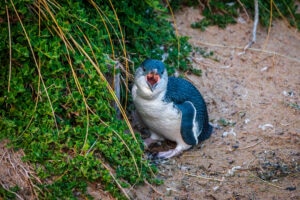
Penguins Plus is the most popular upgrade and provides a separate, more intimate grandstand positioned closer to the beach with better sightlines and fewer people around you. The penguins cross directly in front of the Penguins Plus viewing area, and the closer proximity makes a real difference to the experience. This is the recommended upgrade for most visitors who want more without committing to a full guided tour. Adult tickets are approximately $93.00, with children’s tickets around $46.50.
Underground Viewing
Underground Viewing puts you below the boardwalk, watching through a glass window as penguins waddle past at eye level on their way to their burrows. It is an entirely different perspective that makes the penguins’ small size and individual personalities feel immediate. Penguins occasionally stop right at the window to look in, which produces the kind of direct eye contact that is difficult to describe and genuinely difficult to forget. Underground Viewing is also a fully sheltered option, making it particularly appealing in winter when the sea breeze on the beach can be cold.
Guided Penguin Tour
A Guided Penguin Tour involves joining a small group with a ranger guide who provides expert commentary via personal headsets as you walk through the colony. The guide knows which burrows are active, which penguins are recognisable from research records, and where to look for specific behaviours. Reserved seating in the grandstand is included, and the smaller group size means closer, less crowded access to the boardwalk areas after the parade. This option is recommended for guests who want to genuinely understand what they are watching. Tours are limited to guests aged 12 and over.
Penguins Premium and the Ultimate Adventure Tour
Penguins Premium offers a beachfront viewing experience on a limited-capacity stand right at the water’s edge, guided by a ranger with a presentation before the parade begins. It is as close to the penguins crossing the beach as any visitor can get, and the lack of crowds makes it feel genuinely personal. Available for guests aged 12 and over only.
The Ultimate Adventure Tour is the most exclusive experience of all. After a 1.5-kilometre guided walk including a cliff descent and beach crossing, small groups of guests find themselves on a secluded beach well away from the main parade site, watching a quiet colony of penguins in near-complete solitude. Night vision binoculars are provided. It is a genuine adventure that requires reasonable fitness and is rated by those who have done it as one of the most remarkable wildlife experiences in Victoria. Limited to guests aged 16 and over.
Best Time to Visit the Phillip Island Penguin Parade
The Penguin Parade runs 365 nights a year. There is genuinely no bad time to visit. That said, different months offer different experiences and there are practical considerations to weigh depending on what matters most to you.
Summer (November to February): Maximum Penguins, Latest Evenings
Summer is the most active period for the colony. Chick hatching peaks from September to December and the subsequent chick-rearing period continues into January and February, making the colony its busiest and most productive. The boardwalk experience during summer offers penguin activity at almost every burrow. The trade-off is that sunset does not arrive until around 8.30 to 9 pm, so the parade runs very late. For families with younger children, this can mean a very long evening. Summer is also the busiest period for visitors, and booking Penguin Parade tickets well in advance is essential.
Autumn (March to May): Quieter Colony, Moulting Season
March to May brings the moulting season and the subsequent period when many adults are at sea rebuilding their weight. The colony is quieter and penguin numbers on the beach are lower during this window. The sunset arrives earlier, typically around 6.30 to 7.30 pm, making for a more manageable evening. April and May are the quietest months of the year at the Penguin Parade, which suits guests who prefer fewer crowds and a more reflective experience.
Winter (June to August): Early Sunsets, Breeding Activity Begins
Winter is a good time to visit for a different reason. The parade begins early, around 5.30 to 6 pm, and combined with the shorter daylight hours, the whole experience can be finished before 8 pm. Breeding activity begins to pick up from July, with males returning to burrows and pairs reuniting. The beach can be cold and windy in winter, so Underground Viewing is particularly good value in this season. Visitor numbers are lower, which means shorter queues, more relaxed boardwalk access, and a generally more intimate atmosphere.
Spring (September to October): The Sweet Spot
October and November offer perhaps the best overall balance. The weather is warming, chicks have hatched and are growing, adult activity is at its peak, and the sunset falls around 7.30 to 8 pm: late enough to feel like a proper evening out, but not so late as to become impractical for families. Visitor numbers are building but have not yet reached the January peak. Advance booking is still strongly recommended but the experience of the colony at this time of year is among the most rewarding of the year.
For Carnival guests arriving on a Melbourne port day, the visit typically works best between September and April, when the evening timing aligns with a full day in the city followed by the drive south to Phillip Island.
Combining Phillip Island with a Carnival Melbourne Shore Day
Phillip Island is ideally positioned as the evening bookend to a full day exploring Melbourne on a Carnival shore day. Ships usually dock in Melbourne early in the morning give guests the entire day to explore the city, then head south to Phillip Island in the late afternoon for the parade.
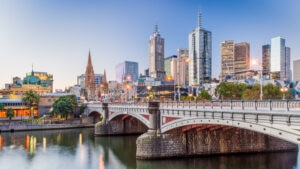
The standard approach involves spending the morning in Melbourne, perhaps exploring the laneways, visiting the Queen Victoria Market, or taking the tram down to St Kilda, then heading southeast through the Dandenong foothills toward the island in the mid-afternoon. The drive takes 90 minutes to two hours depending on traffic, and arriving at the Visitor Centre an hour before sunset gives you enough time to select your viewing area and settle in.
Tour operators offer guided full-day Melbourne and Phillip Island combinations that include return transport from the ship, stops at Phillip Island highlights including the Nobbies, the Koala Conservation Reserve, and Churchill Island, and culminate with the Penguin Parade before returning to the city. This is the most practical option for Carnival guests who prefer not to hire a car.
Important: bookings for Penguin Parade tickets and any upgrade experiences should be made well in advance, especially for peak season visits. The Penguins Plus grandstand, Guided Penguin Tour, and Ultimate Adventure Tour all have limited capacity and fill quickly on nights when multiple cruise ships or tour groups are visiting.
Melbourne Shore Excursions
What to Bring and What to Know Before You Go
A successful Penguin Parade visit is largely a matter of preparation. Here are the most important things to know.
- Dress warmly: Even on pleasant summer evenings, the beach at Summerland faces the open Bass Strait and a wind chill can make the grandstand feel considerably colder than the city. Bring a jacket, a windproof layer, and a warm hat if visiting in autumn or winter. Layers are the safest approach.
- No flash photography from sunset: All photography with flash is strictly prohibited from sunset onwards. This is a wildlife protection rule, not a guideline. Cameras and phones should be set to no-flash mode before you arrive. The atmosphere on the beach at night is low-lit by design and it is genuinely better to simply watch rather than photograph.
- Arrive at least an hour before sunset: For the best seating position in the general grandstand, arrive early. The Penguins Plus and guided options have reserved seating, so the timing pressure is lower for those options.
- Penguins have right of way on the boardwalks: After the parade, when walking the boardwalks through the colony, always yield to any penguin crossing your path. They are following the same routes home they have used for years and will not deviate for a tourist. Step to the side, stay quiet, and let them pass.
- Book tickets online in advance: The Penguin Parade sells out regularly, particularly during summer school holidays, Easter, and over Christmas. Booking through the Phillip Island Nature Parks website before your cruise departure is strongly recommended.
- Silence is appreciated: Particularly during the parade itself, keeping voices low makes for a better experience for the penguins and for your fellow visitors. The sounds of the colony at night, the calling of penguins finding their partners, the shuffling of hundreds of small feet across sand, are some of the best parts of the whole experience.
Frequently Asked Questions
What time do the penguins arrive at Phillip Island?
The Phillip Island Penguin Parade begins at dusk every night of the year, timed to the exact moment of sunset. In summer (December to February), the parade begins around 8.30 to 9 pm as sunset falls late. In winter (June to August), the parade begins around 5.30 to 6 pm. In spring and autumn, sunset falls between these extremes. Visitors should arrive at the Visitor Centre at least one hour before the advertised sunset time to find a good position before the penguins begin emerging from the ocean.
How many penguins are in the Phillip Island Penguin Parade?
Phillip Island is home to approximately 40,000 breeding little penguins on the Summerland Peninsula, making it the largest little penguin colony in the world. On any given night during breeding and chick season, hundreds of penguins cross the beach. Numbers vary by season, with the highest activity from September through January during chick-rearing. During the quieter months of April and May, fewer penguins are present as many are away at sea after the breeding season.
Do I need to book Penguin Parade tickets in advance?
Yes. Penguin Parade tickets should always be booked online in advance as it’s a popular experience which tends to book out. Carnival guests can book Carnival Shore Excursions online before their cruise departs. This is the most convenient option as tours are timed specifically to fit in with the cruise ship schedule. Tickets can also be booked through the Phillip Island Nature Parks website, Even for general viewing, arriving without a booking on a busy night risks missing out.
What is Penguins Plus at Phillip Island?
Penguins Plus is an upgraded viewing experience at the Phillip Island Penguin Parade that provides a separate, smaller grandstand positioned closer to the beach than the standard general viewing area. The Penguins Plus grandstand offers better sightlines, fewer people, and a more intimate vantage point as the penguins cross the sand directly in front of you. It is the most popular upgrade and is recommended for guests who want to get more out of the experience without committing to a full guided tour.
What is the best time of year to visit the Phillip Island Penguin Parade?
The Penguin Parade runs every night of the year and is worth visiting at any time. For the most colony activity, the chick-rearing season from September to January is the best period. October and November are often considered the sweet spot: warm weather, high penguin numbers, an 8 pm sunset timing that suits most ages, and somewhat fewer crowds than January peak. Winter visits (June to August) offer early sunsets from around 5.30 pm, which suits families, and a more relaxed atmosphere with fewer visitors.
Can I take photos at the Phillip Island Penguin Parade?
No flash photography is permitted from sunset onwards at the Penguin Parade, and this rule is strictly enforced. Camera flashes can temporarily blind penguins, causing real distress and interfering with their ability to navigate to their burrows. In the period before sunset in general public areas, photography without flash is generally fine. Most visitors find the experience of simply watching, without the distraction of a camera, to be the richer one.
How do I get from Melbourne to Phillip Island on a cruise shore day?
Phillip Island is about 140 kilometres from Melbourne and the most practical options from a cruise are a self-drive hire car or a guided full-day tour. Tour operators offer Melbourne and Phillip Island day combinations that include return transfers from the cruise terminal, visits to Phillip Island highlights including the Koala Conservation Reserve and the Nobbies, and culminate with the Penguin Parade before returning to the city. Public transport to Phillip Island is limited and does not run late enough to return after the evening parade.