


Whale Watching Season in Australia: Best Seasons, Locations and What to Expect on an Excursion
Every year, somewhere around late May, something extraordinary begins happening just offshore from Australia’s east coast cities. Tens of thousands of humpback whales leave their feeding grounds in Antarctica and begin one of the longest migrations of any mammal on Earth, travelling up to 10,000 kilometres north to the warm tropical waters of Queensland to mate, give birth, and nurse their young.
On the way, they pass directly past Sydney, Brisbane, and some of Australia’s most beautiful coastline. And on a Carnival cruise departing from either of those cities between May and November, you have a genuine chance of witnessing one of nature’s greatest spectacles from the deck of the ship or as part of a dedicated whale watching shore excursion.
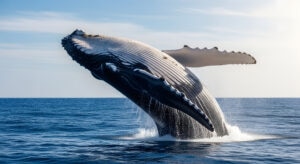
Australia’s Humpback Whale Migration: The Basics
Australia is home to 45 species of whales and dolphins in its surrounding waters, but the humpback whale is the undisputed star of the annual migration. More than 60,000 humpback whales travel up and down the east and west coasts of Australia each year, making it one of the most active whale migration corridors on the planet.
The journey starts in Antarctica, where humpbacks spend the southern summer months feeding on krill and building up the thick blubber reserves they will need to sustain them through the long migration north. In late autumn, they begin heading north in a remarkable feat of navigation that spans thousands of kilometres of open ocean, relying on magnetic fields, water temperatures, and what appears to be cultural knowledge passed down from mother to calf over generations.
On the northward journey, adult whales travel faster and with more energy, often displaying spectacular acrobatic behaviour. On the southward return from August onwards, the pace slows and the sightings become more intimate: mothers travelling with their new calves, teaching the young animals to breach, tail slap, and navigate the ocean for the first time. Both phases offer incredible whale watching, and the best time to see whales in Australia is different depending on which behaviours you want to witness.
Whale Watching Season Australia: When to Go
The broad whale watching season in Australia runs from May to November on the east coast, though the peak window and the type of experience vary by month and location.
May to July: The Northward Migration
From mid-May, the first humpbacks begin appearing off the New South Wales coast, heading north. By June and into July, the migration is at its busiest, with the largest numbers of whales passing Sydney and the New South Wales coast at any point in the season. This is generally considered the peak of whale watching season in Australia for sheer numbers of sightings.
On the northward migration, whales are travelling with purpose and are full of energy from their summer feeding in Antarctica. This phase tends to produce more dramatic surface behaviour: extended breaching sequences, competitive groups of males, and large pods moving together along the coast. The morning departures on whale watching tours during this period often produce the most exciting encounters.
August: The Crossover Month
August is a fascinating month for whale watching because both the northward and southward migrations overlap. Some whales are still making their way north while the frontrunners have already turned south, meaning you can encounter both adult whales and early mothers with calves on the same tour. In Hervey Bay, August is the peak of the whale watching season, with the calm, sheltered waters filling with humpbacks resting and socialising before continuing south.
September to November: Mothers, Calves and the Southward Journey
The southward migration from September through to November is slower and more intimate. Female humpbacks who gave birth in the tropics are now making their first journey to Antarctica with their new calves, and they stick closer to shore and travel at a more leisurely pace to conserve energy and protect the young animals.

This phase of whale watching season is especially popular with families and photographers. Calves are curious and playful, often practising their breach, tail slap, and spy-hop while their mothers rest nearby. Watching a mother teach her calf to breach is one of the most extraordinary wildlife sightings available anywhere in Australia, and October and November regularly produce some of the season’s most memorable encounters.
Best Whale Watching Locations in Australia
Several locations along Australia’s east coast offer exceptional whale watching, but three stand out as the most accessible for guests.
Sydney Whale Watching
Sydney sits directly on the path of what marine biologists call the Humpback Highway, the stretch of coastline where tens of thousands of whales pass each year close enough to shore to be visible from headlands and easily accessible on a two-to-three-hour tour. Around 40,000 humpbacks travel past Sydney every year, and the number is growing as the population continues its recovery following the end of commercial whaling in Australia in 1979.
Whale watching tour Sydney options depart from Circular Quay and Darling Harbour throughout the season, typically running between two and three hours. Tours head out through the Heads into the Pacific and travel along the coast south of Sydney, where the Humpback Highway runs closest to shore. On a good day, the combination of Sydney’s stunning coastal scenery and an encounter with humpback whales a few hundred metres from the boat is one of the most extraordinary wildlife experiences in Australia.
Peak season in Sydney for whale watching is June and July on the northward migration. The southward migration from September to November offers the best chance of seeing mothers with calves. It is possible to see whales on any tour from late May through to mid-November, though sightings are not guaranteed and operators typically offer a return tour free of charge if no whales are spotted.
For Carnival guests departing from Sydney, the timing of your cruise matters. A Sydney departure or port call between June and October puts you squarely in whale season, and the city’s coastal headlands offer free land-based viewing from Cape Solander in Kamay Botany Bay National Park as a complementary option to a tour.
Moreton Island and Tangalooma Whale Watching
For Carnival guests departing from Sydney, Moreton Island is the premier whale watching destination and one of the most convenient in Australia. The Tangalooma whale watching cruise departing from Brisbane is the most popular whale watching experience in Queensland outside of Hervey Bay, operating daily from June through to mid-October on Australia’s largest dedicated whale watching vessel.
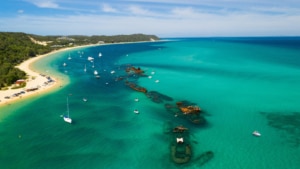
The tour departs Brisbane by high-speed catamaran, crosses Moreton Bay to Tangalooma Island Resort, and then heads north to the tip of Moreton Island where up to 33,000 humpback whales migrate past each winter season. A three-hour whale watching cruise runs from Tangalooma with full commentary from eco rangers, a light lunch included, and the option to use a hydrophone to listen to the whales’ songs underwater.
The sighting rate on Tangalooma whale watching cruises is exceptionally high due to the sheer numbers of whales passing the area. The operator offers a 100 percent whale sightings guarantee: if no whales are sighted on your cruise, a complimentary future tour is provided. Most days, guests encounter multiple whales, with frequent breaching, tail slapping, and occasionally a whale mugging the boat, circling so close that the vessel has to stop and wait for it to move away.
Carnival’s Moreton Bay Whale Watching Cruise shore excursion packages this experience directly for cruise guests. It is one of the most popular shore excursions available on Moreton Island sailings and is highly recommended as a pre-booking before you board. The combination of a Carnival Moreton Island cruise, which already offers opportunities for snorkelling the famous shipwrecks, and sandboarding, , with the whale watching cruise adds up to one of the most complete wildlife and adventure day trips in Australia.
Whale Watching Hervey Bay: The World’s Whale Heritage Site
Hervey Bay, about 3.5 hours north of Brisbane on the Fraser Coast, holds a distinction unlike any other whale watching location in the world: it is the first officially designated Whale Heritage Site on the planet. The designation recognises the special relationship between the town and the humpback whales that visit its calm, sheltered waters every winter.
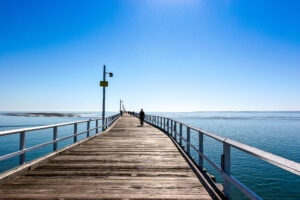
What makes Hervey Bay unique is its geography. The world’s largest sand island, K’gari (formerly Fraser Island), forms a natural barrier on the eastern side of the bay, creating a protected lagoon of calm, clear water that humpbacks use as a rest stop on their southward migration. Rather than passing through quickly, the whales often spend days or even up to a week in the bay, resting, socialising, nursing their calves, and engaging in playful social behaviour that is rarely seen anywhere else on the migration route.
The best time for whale watching in Hervey Bay is from mid-July to late October, with peak season from August to September when the highest numbers of whales are present. Because the animals are resting and relaxed rather than actively migrating, encounters at Hervey Bay tend to be extraordinarily long and intimate. A whale mugging, where a curious humpback circles the boat for extended periods, is genuinely common here.
Hervey Bay is not directly accessible as a Carnival Shore Excursion from most itineraries, but it is within reach as an independent extension before or after a cruise from Brisbane. A 3.5-hour drive or short domestic flight from Brisbane makes it accessible for guests who arrive a day or two early or stay on after their sailing.
Moreton Bay Whale Watching Cruise
What to Expect on a Whale Watching Excursion
Whether you are booking the Tangalooma whale watching cruise from Moreton Island or a Sydney tour, the experience follows a broadly similar structure, and it helps to know what is in store before you board.
How a Whale Watching Tour Works
Tours typically run between two and three hours. After a safety briefing and introduction from the crew, the vessel heads out from port into open water. Most tours in Sydney head south of the Heads to the coastal waters where the Humpback Highway runs, while the Tangalooma tour heads north around the tip of Moreton Island to the main migration corridor.
Once in the whale watching area, the crew uses visual spotting from the deck to locate whales. Experienced guides can identify individual animals by the unique pattern of markings on their tail flukes, which marine biologists use in the same way as a fingerprint. When a whale is located, the vessel approaches to the legally required minimum distance of 100 metres for adult whales (slightly further for mothers with calves) and the watching begins.
Expert commentary from guides or eco rangers runs throughout the tour, covering whale biology, migration patterns, behaviour interpretation, and conservation. Many tour boats are fitted with hydrophones so you can listen to the extraordinary underwater songs of the whales while you watch them from above. The experience is equal parts thrilling and genuinely moving.
Whale Behaviours You Might See
Humpback whales are highly active and social animals, and a whale watching excursion can produce a remarkable range of natural behaviours. Here is what to look for.
Breaching is the most dramatic behaviour and the one everyone hopes to see: a 40-tonne whale launching its entire body completely out of the water before crashing back down in an explosion of white water. Researchers believe breaching serves as a form of long-distance communication, carrying messages to other whales through the shockwaves created by the impact. Whatever the reason, it is one of the most extraordinary sights in nature. It does not happen on every tour, but when it does, no one on the boat forgets it.
Spy-hopping is when a whale lifts its head vertically above the water, just enough to get its eyes above the surface and look around. It is genuinely curious behaviour and happens close enough to the boat to feel like a moment of direct eye contact with an animal the size of a bus.
Tail slapping and pectoral fin slapping, where the whale raises its tail or long white fins and slaps them repeatedly on the water surface, are both forms of communication between whales. The sound carries through the water over long distances. When a whale tail slaps near the boat, the sound carries across the whole vessel.

A mugging is the term used when a whale approaches the boat and circles it at close range, sometimes coming so near that the vessel must stop its engine and wait. Not every tour experience this, but when it happens at Tangalooma or in Sydney, it tends to become the defining memory of the experience.
Blow spotting is how guides first locate whales in open water: the plume of mist, water vapour, and mucus that a humpback exhales through its blowhole can be seen from several kilometres away. Learning to spot the blow is the first skill any whale watcher develops.
Tips for Making the Most of Your Whale Watching Excursion
Dress in layers. Tours head out into open water, and it is considerably cooler and windier offshore than it feels on land, even in the middle of the Australian winter. Bring a waterproof jacket or windbreaker regardless of how sunny the morning looks.
Take seasickness medication before you board if you are susceptible to motion sickness. Even on relatively calm days, the open ocean swell can be noticeable, and the medication needs to be taken at least an hour before the tour to be effective. Morning tours tend to benefit from calmer sea conditions than afternoon departures.
Bring a camera with a good telephoto or zoom lens or use the portrait mode on a modern smartphone for closer shots. The best images come from always keeping the camera ready rather than only lifting it when a whale surfaces. The blow often appears before the whale does, giving you a few seconds of warning to prepare.
Check the tour operator’s sightings guarantee policy before you book. Most reputable operators, including the Tangalooma whale watching tour, offer a free return trip if no whales are sighted. Sighting rates during peak season are generally very high, but whales are wild animals and their presence is never guaranteed.
Pre-book before your cruise sails. The Tangalooma whale watching tour from Moreton Island is one of Carnival’s most popular shore excursions and fills quickly, particularly for departures during peak season in August and September.
Carnival Shore Excursions
Whale Watching and a Carnival Cruise: The Perfect Combination
A Carnival cruise departing from Sydney or Brisbane during whale season gives you one of the best possible platforms for experiencing the humpback migration. Sailing through the Humpback Highway rather than along it, there is a genuine chance of seeing whales directly from the ship deck as you depart or arrive, particularly during departures from Sydney Harbour when whales are often spotted close to the Heads.
The Moreton Island cruise itinerary from Sydney is particularly well-suited to whale watchers, combining the Tangalooma whale watching cruise shore excursion with the broader Moreton Island experience on the same sailing. A four-night Moreton Island cruise from Sydney departing in winter provides the opportunity for, sandboarding, snorkelling the famous shipwrecks, and the whale watching cruise all in one short trip.
For Sydney departures, a whale watching tour from Circular Quay pairs naturally with any Carnival sailing from Sydney between June and November. The tours run independently of the ship’s departure and can be booked in the days around your cruise embarkation or as a pre-cruise activity if you arrive in Sydney a day or two early.
Whether you encounter a humpback from the deck of your Carnival ship or on a dedicated excursion, the sight of these extraordinary animals moving through the ocean within sight of Australia’s most iconic coastlines is something that stays with you for a very long time.
Moreton Island Cruise With Whale Watching
Frequently Asked Questions
When is whale watching season in Australia?
Whale watching season in Australia runs broadly from May to November on the east coast. The peak months for whale watching in Sydney and New South Wales are June and July during the northward migration. Hervey Bay in Queensland reaches its peak from August to October, when the southward migration brings mothers and calves into the sheltered bay. The Tangalooma whale watching cruise off Moreton Island near Brisbane operates daily from June through to mid-October.
What types of whales can I see in Australia?
Humpback whales are by far the most commonly sighted species during the annual migration, with more than 60,000 travelling past the Australian east coast each year. Other species that can be spotted include southern right whales, particularly along the southern coastline, minke whales, Bryde’s whales, and occasionally blue whales and orcas, though these rarer species are not guaranteed sightings. Dolphins, sea turtles, and Australian fur seals are also frequently spotted on whale watching tours.
What is the Tangalooma whale watching cruise like?
The Tangalooma whale watching cruise is a full-day experience departing from Brisbane to Moreton Island. After crossing Moreton Bay by high-speed catamaran to Tangalooma Island Resort, guests board Australia’s largest dedicated whale watching vessel for a three-hour cruise around the northern tip of Moreton Island, where up to 33,000 humpback whales migrate past each winter. The tour includes expert eco ranger commentary, a light lunch, and a 100 percent whale sightings guarantee. Carnival offers this as a Shore Excursion on Moreton Island sailings.
What is the best time to see whales in Australia?
The best time to see whales in Australia depends on what you want to see. For the highest numbers of humpbacks and the most energetic surface behaviour, June and July on the NSW east coast is the peak period for the northward migration. For the most intimate encounters with mothers and calves, September and October on the southward return offers calmer, closer sightings. Hervey Bay from August to October is considered the best single location in Australia for extended, up-close whale encounters. Overall, August and September offer the strongest combination of sighting frequency and behavioural diversity across most east coast locations.
Can I see whales from a Carnival ship?
Yes, particularly during departures from Sydney between May and November. Carnival ships departing Sydney Harbour pass directly through the Humpback Highway, and whales are often spotted from the deck during the harbour departure and along the NSW coastline in the hours following. On Moreton Island sailings from Sydney during June to October, whale sightings from the deck are also common, and the dedicated Tangalooma whale watching cruise shore excursion is available for a closer encounter. While not guaranteed, whale sightings from the ship deck are a genuine possibility on any Carnival sailing from the east coast during winter and spring.
How long does a whale watching tour last?
Most dedicated whale watching tours run between two and three hours on the water. The Tangalooma whale watching cruise from Moreton Island includes a three-hour whale watching cruise plus travel time from Brisbane, making it a full-day experience. Sydney tours generally run two to three hours from Circular Quay. Longer half-day tours of around four hours are available from both cities for those who want more time on the water.
How do I book a whale watching shore excursion with Carnival?
The Moreton Bay Whale Watching Cruise shore excursion can be pre-booked through the Carnival website before you sail. Pre-booking is strongly recommended as this is one of the most popular shore excursions on Moreton Island sailings and fills quickly during peak whale season in August and September. All Carnival Shore Excursions are timed to your ship’s schedule with guaranteed return before departure.